Sketch Foundations Week 1
Last month I signed up for Liz Steel's online class Sketch Foundations. I had always loved Liz's artwork since I discovered it via my online urban sketching inspiration journey and was keen to discover some tips and ideas to help me progress over the 12 weeks, particularly as the course ran from Nov - Feb. A time that traditionally I am more prone to become ill.
This week was 'Getting To Know Your Materials' - and Liz encouraged us to explore the materials we had, how they worked, and if they earnt a place in our sketching kit. Now I am a self confessed art supplies addict so I'm not short of stuff to play with and Liz was clear, you don't have to buy stuff for the course.
My current kit included inktense pencils, Pigma Micron pens, a small watercolour box, pencils, a white paint pen, a white coloured pencil and waterbrushes.
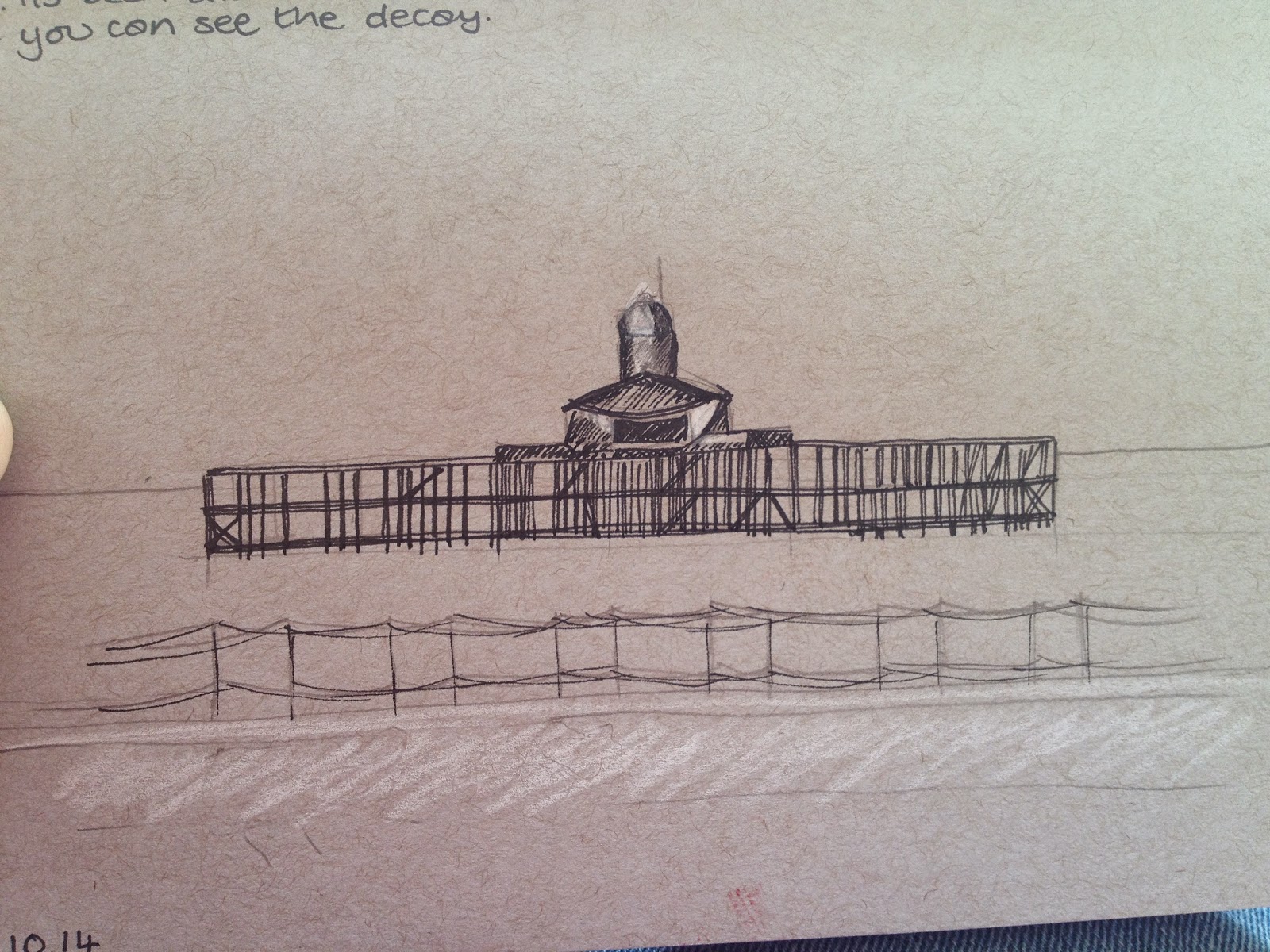
The initial attempt at drawing in pen and in pencil provided an interesting contrast between my feelings at the start of the year and now. In March, April I wasn't comfortable with anything in my kit and often used pencil as I could 'rub it all out' if I needed. Pen was only used when I had done the pencil guidelines and any watercolour or inktense left me feeling totally dissatisfied with my work.
As I started the pictures below I felt so much more comfortable with the pen, having the confidence to put those lines down with all the wobbly bits included. I was less satisfied with the pencil and it just didn't feel comfortable. I had to work hard to resist the temptation to rub it all out. The colour was added by an inktense pencil, highlighting my reluctance to use my watercolour pans.

I then turned to making mixing charts and this provided a chance to really experiment with my colour materials. The charts below show both my watercolour and my inktense mixing grids. For me this was a step forward in understanding my materials, but also being able to see how to make colours rather than buying specific tubes or pans. This was particularly useful with the inktense as I began to see how to combine them to make new colours.


The final piece this week started one evening while my other half was on a night shift. This was the point when I finally achieved 'flow' , that experience of being totally into the moment that you don't notice the passage of time.
This was a double page spread in my a4 moleskine watercolour book - drawing of my materials. Starting with the little watercolour box, (which by the time I finished this I wanted to go back and redo) and finishing with the red clip, I drew the pens, pencils and brushes in my kit.
This was partly inspired by Andrea Joseph's work as she had some amazing drawings of everyday objects so with that in mind... Here it is.


You will notice some colour notes as I tried to mix my watercolours to produce specific things, but I am most proud of the waterbrush and rotring tikky pencil. I learnt not only the colour mixing aspect, but also the patience required to layer watercolour paint and when to leave highlights. Finally I had produced a watercolour painting I felt proud of.
So what have I learnt?
More supplies is not always a good thing
I like thin delicate pen lines
Watercolour requires patience
Inktense have possibilities
Know your materials and if you don't use it, don't carry it.
Reevaluate your kit regularly.
Now onto week 2
This was a double page spread in my a4 moleskine watercolour book - drawing of my materials. Starting with the little watercolour box, (which by the time I finished this I wanted to go back and redo) and finishing with the red clip, I drew the pens, pencils and brushes in my kit.
This was partly inspired by Andrea Joseph's work as she had some amazing drawings of everyday objects so with that in mind... Here it is.
You will notice some colour notes as I tried to mix my watercolours to produce specific things, but I am most proud of the waterbrush and rotring tikky pencil. I learnt not only the colour mixing aspect, but also the patience required to layer watercolour paint and when to leave highlights. Finally I had produced a watercolour painting I felt proud of.
So what have I learnt?
More supplies is not always a good thing
I like thin delicate pen lines
Watercolour requires patience
Inktense have possibilities
Know your materials and if you don't use it, don't carry it.
Reevaluate your kit regularly.
Now onto week 2

Comments
Post a Comment